Exploring New Music
As the next step in discovering — and re-discovering — my relationship with music, I noticed that from time to time, I want to listen to a fairly wide range of genres with open curiosity. Music with potential.
Where Spotify, YouTube Music, and most recommendation engines fail me is focus. Or rather: too much of it. If I start a Rival Consoles radio, I will mostly get instrumental, low-tempo electronica that gets fairly boring soon. If I try to trick the system by combining my various tastes into a single playlist, the result is usually more annoying than joyful.
User-curated playlists can be better, but they are hit-and-miss. They also require a lot of crate-digging energy before you strike gold. Sometimes that is fun. Often, it is not.
Theme Time Radio Hour
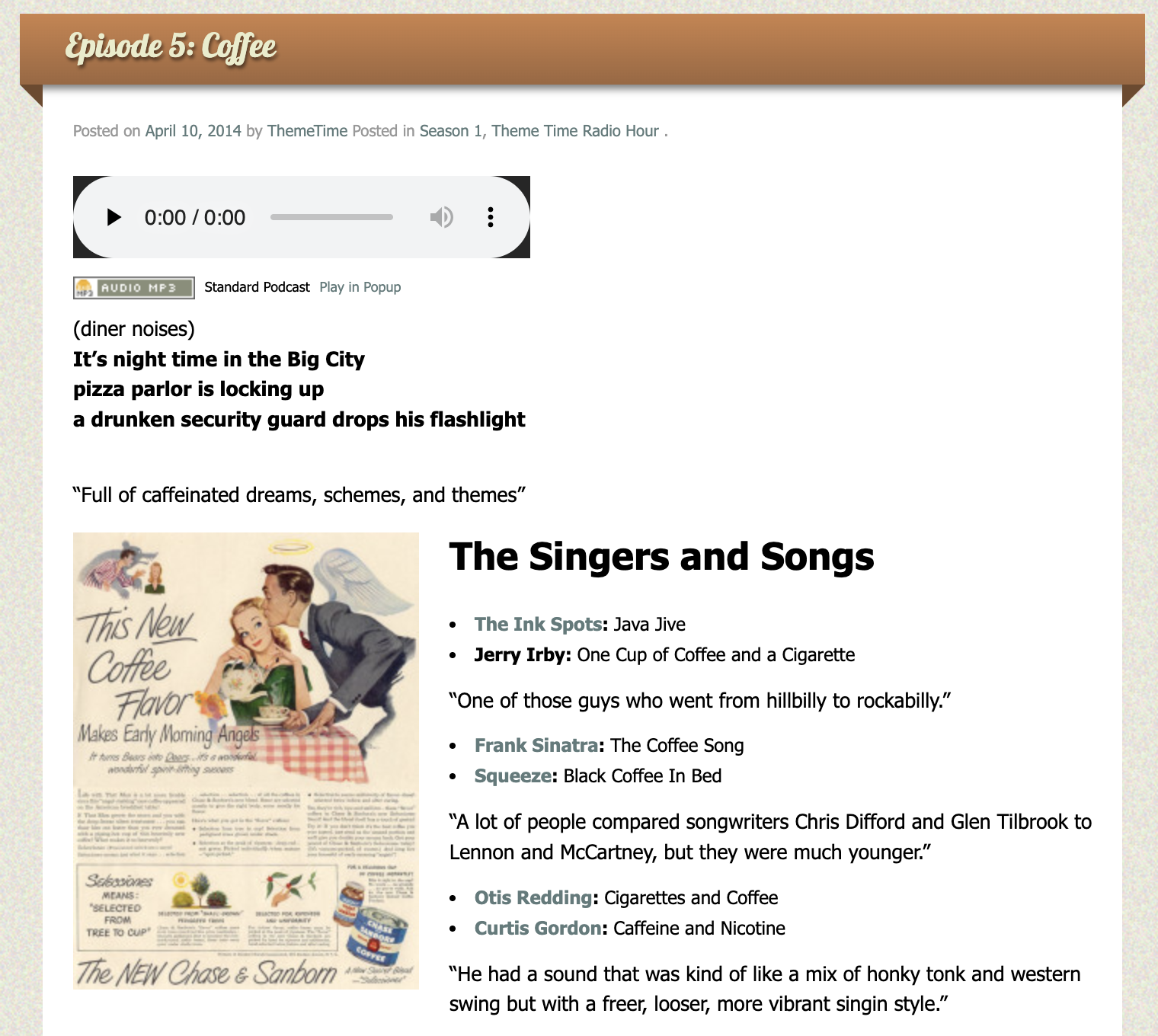
A few weeks ago, I rediscovered something that reminded me what I love about music discovery: Theme Time Radio Hour. In this show, Bob Dylan picks a theme and builds an episode around it using songs, short stories, poetry, and jokes. There are about 100 episodes. It is joyful and heartfelt, especially when contrasted with the joyless, heartless Top10 pop rotations of current FM radios I know. It's not just the music. It is curation with care.
I highly recommend it. Even more so because there used to be a wonderful website listing all the played music, with generous references and links. Thankfully, it has been rescued from the enshittification of the internet by the Web Archive.
Radio Paradise
That ethos stuck with me. And it nudged me back toward internet radio. A thing I used to cherish (even had my own station alongside my DC++ server :D), but have long forgotten.
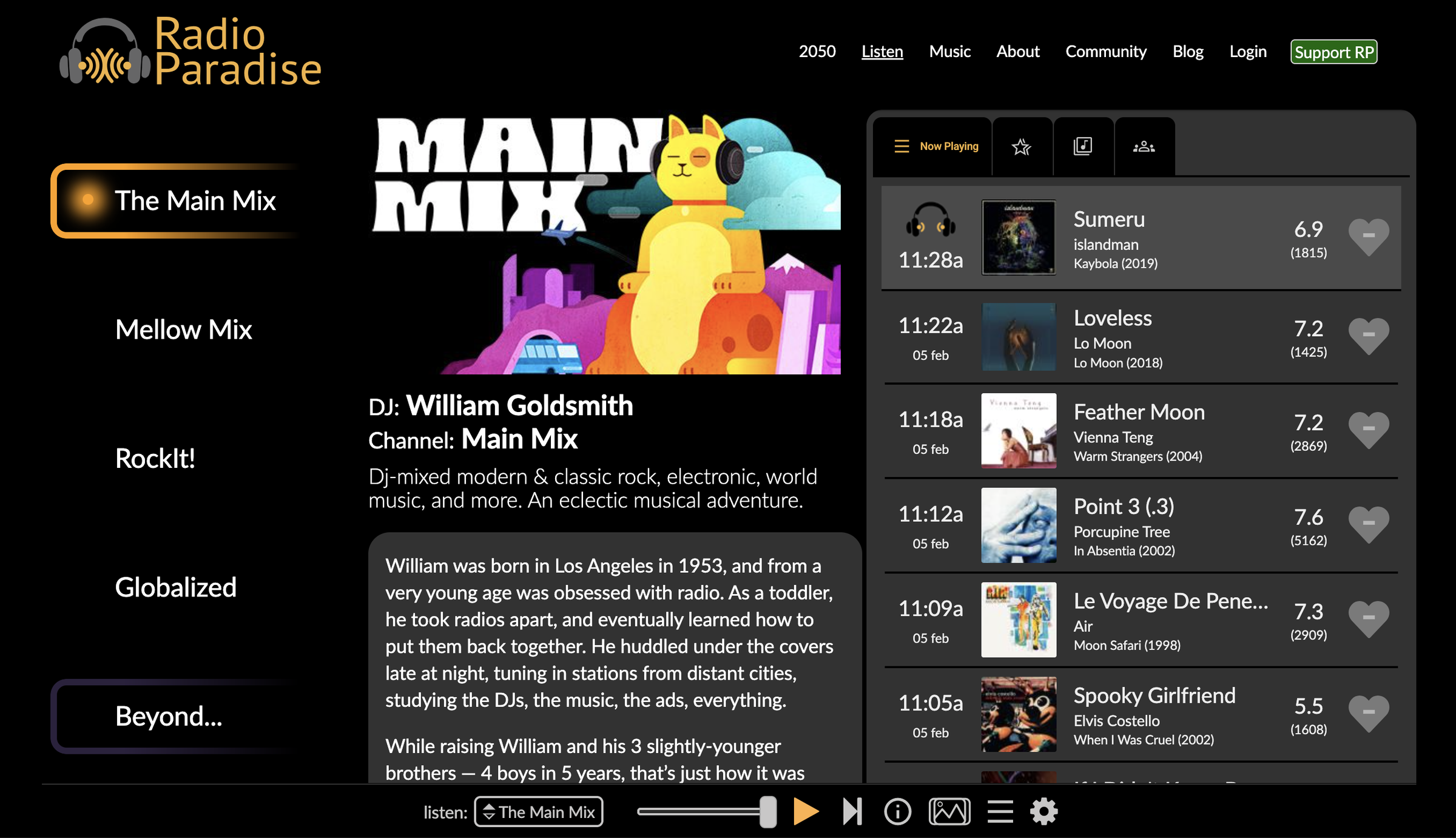
One of my current favourites is Radio Paradise – Main Mix, where Porcupine Tree, GoGo Penguin, Khruangbin, and The Doors can coexist peacefully. That alone makes my day. I wholeheartedly recommend this channel if you enjoy discovering music without genre fences.
Eter
While Radio Paradise's interface is far better than most stations' I tried, I still felt a bit of friction. I did not want it living as a pinned browser tab. Since, unlike their many ad-ridden counterparts, they openly publish their stream URLs, it was, on one hand, surprisingly easy to start listening: just toss it in VLC, and it works. On the other hand, it was confusingly non-trivial to get just what I wanted.
My requirements turned out to be:
- almost frictionless access to the stream,
- a way to see what is playing right now (album art is a bonus),
- a way to note music that catches my attention with as little effort as possible
I will spare you the list of apps and half-solutions I tried. The best solution I found so far that works equally well on my Mac, iPad, and iPhone is hands down Eter. Thank you, dear developer, Krystian Kozerawski, especially for having a one-time-purchase option and not forcing another subscription on me.
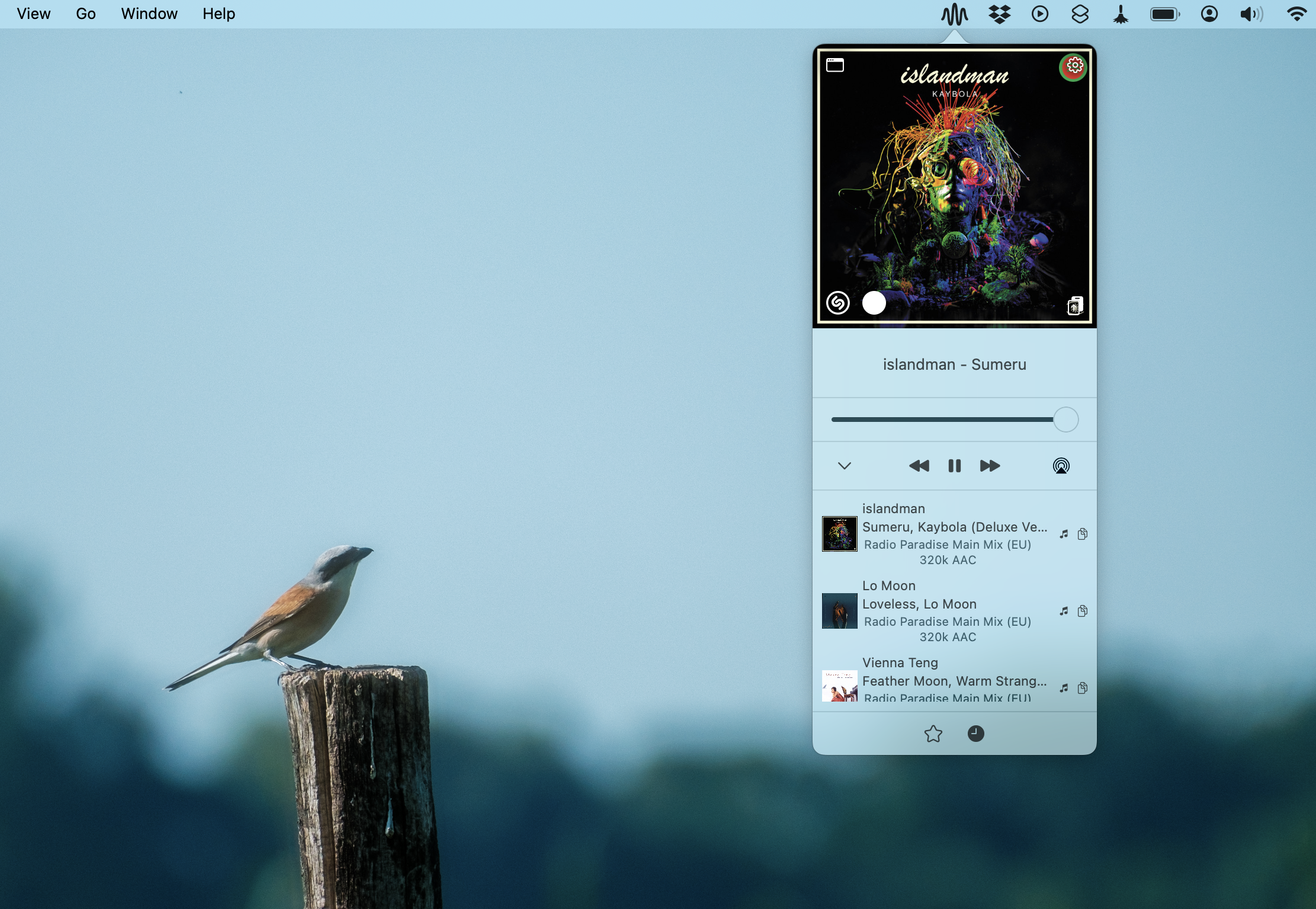
At the moment, Eter lives quietly in my toolbar. Whenever I am in a "let's explore some music" mood, I turn it on. The variety is great. And it is surprisingly fun to try guessing the band before checking the info.
A Standalone Device
This whole internet-radio rabbit hole made me wonder: What if this experience had a physical form?
A standalone device. In its purest version, it would do exactly one thing. You turn it on, it plays music. It shows what is currently playing. You adjust the volume. Maybe you can keep a small text list of songs that caught your attention. Only physical, single-purpose buttons. No touchscreen. No notifications. No other apps.
It could also solve a very practical problem: how difficult it is for my ageing mother to navigate the ever-changing internet, while still wanting to listen to better shows than what current FM stations offer.
I tried finding existing products, but everything I saw was either convoluted (defeating the idea of dedicatedness), or breathtakingly overpriced.
So I decided to try the DIY route.
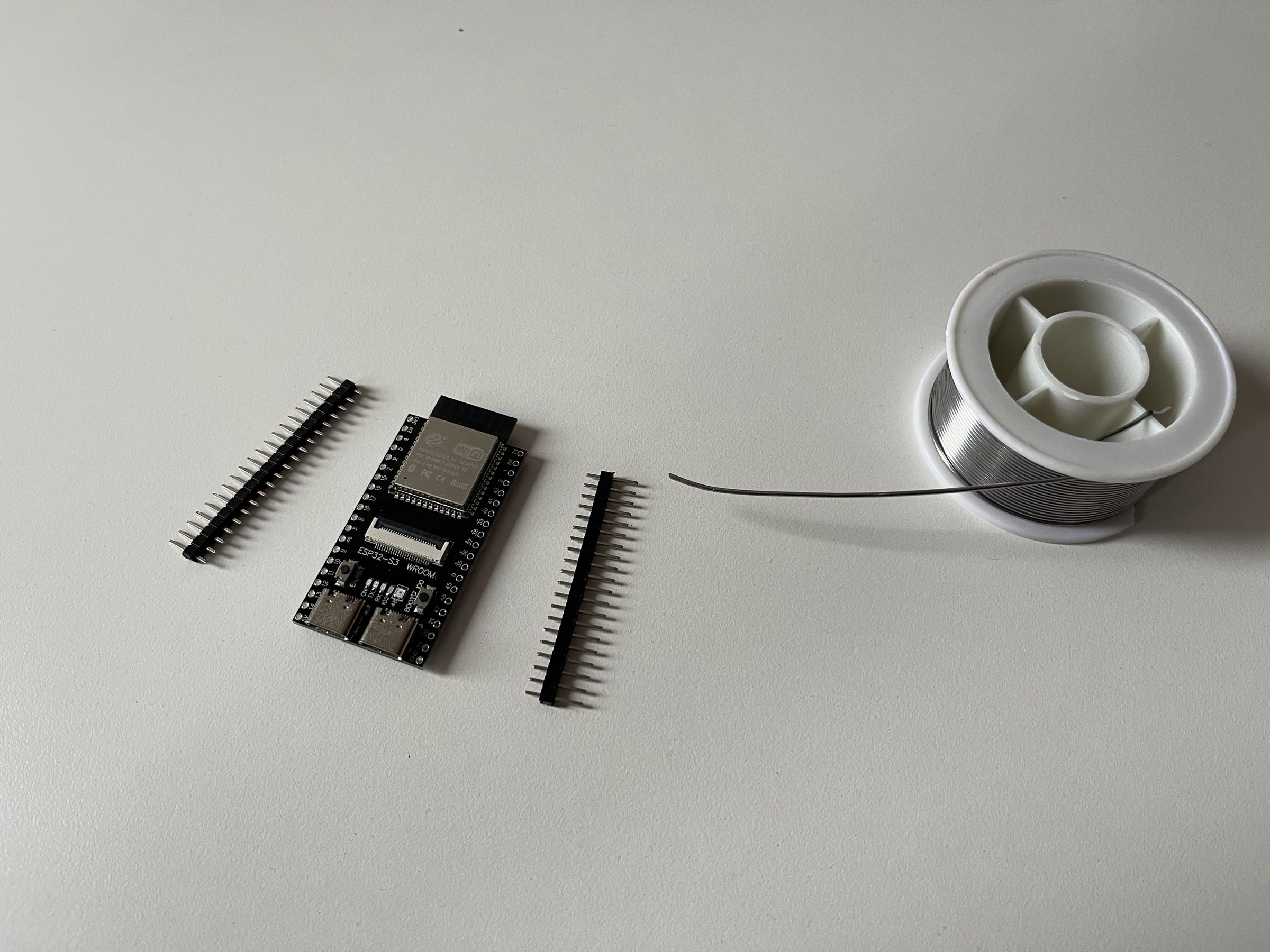
After some research, I picked an ESP32 development board. Built-in Wi-Fi, no extra OS layer, and a good chance of achieving that "instant-on" radio feeling.
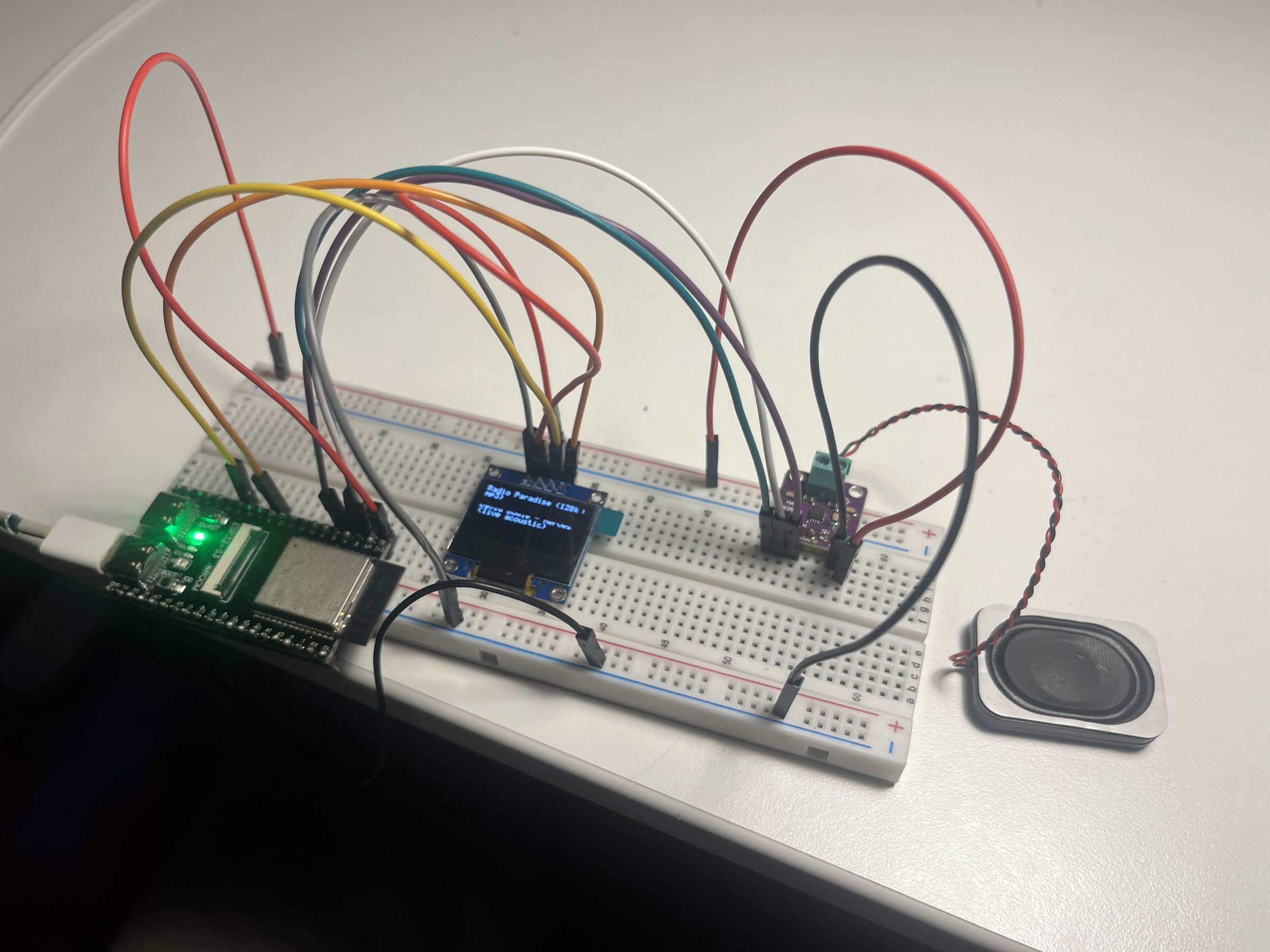
To test the concept, I used a small OLED display, a mono amplifier, and a tiny speaker. I wired everything up on a breadboard and hacked together a prototype in a few hours.
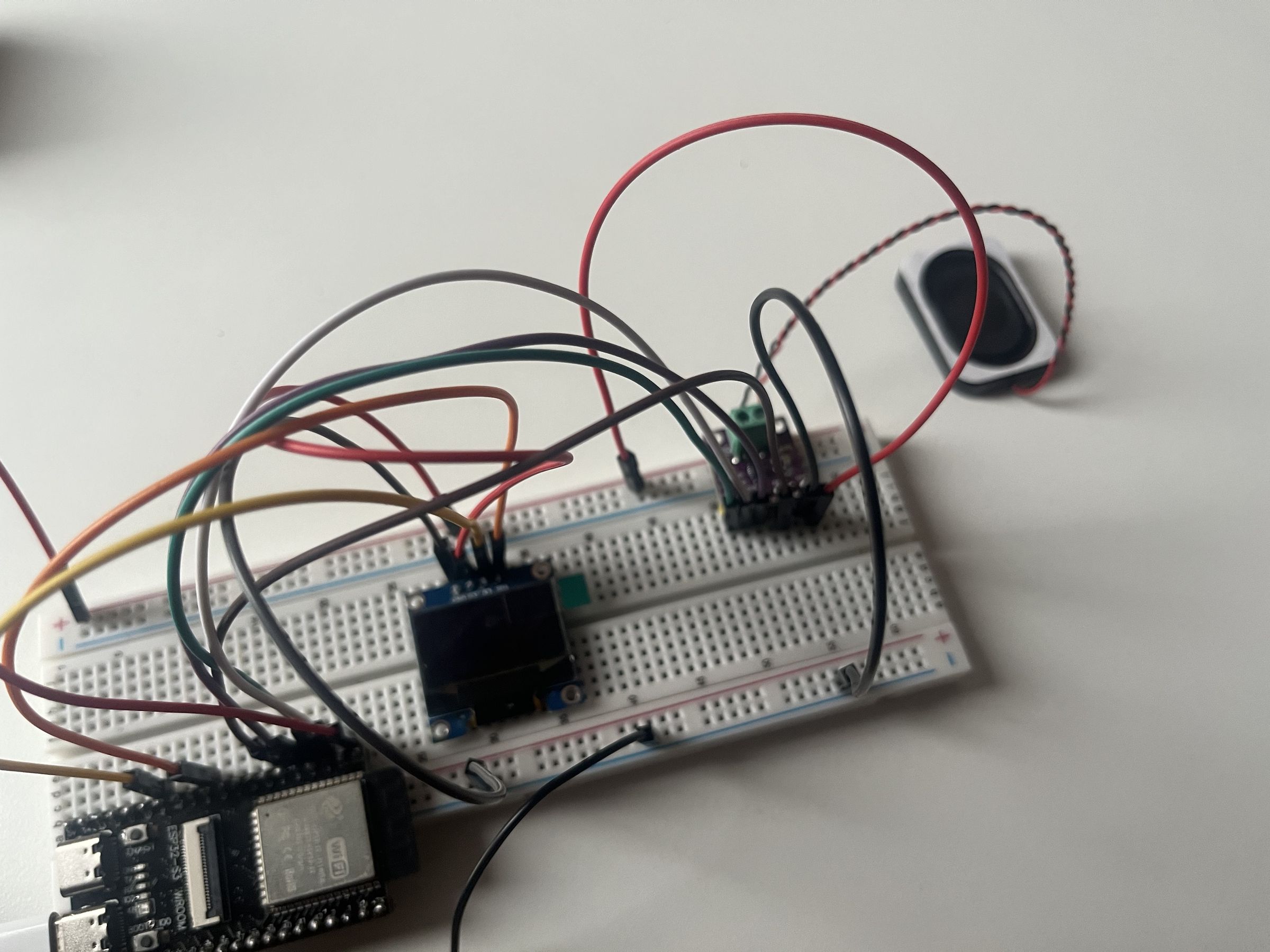
list of components I used in this build:
- ESP32-S3-WROOM-1-N16R8-M development board
- D096-12864-I2C-GV-WH OLED display (0.96", 128×64, SSD1306, I2C)
- MAX98357-M I2S Class-D amplifier module
- 3525-SPKR-4R-3W speaker (4Ω, 3W)
And then it played Radio Paradise!
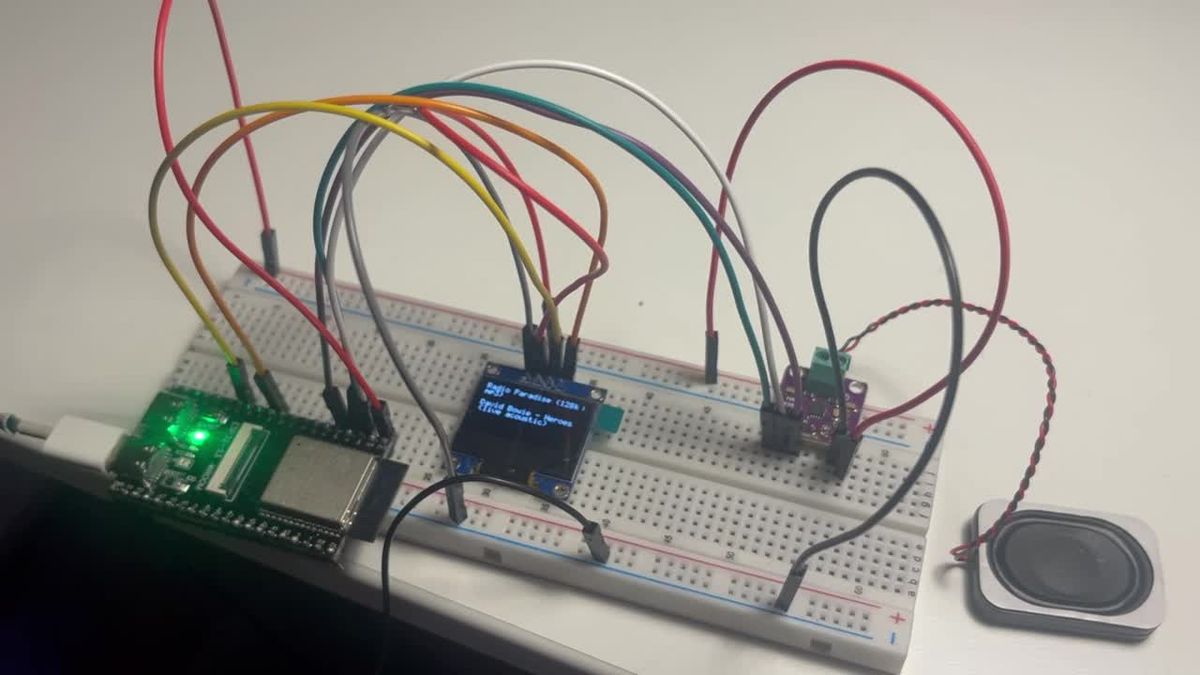
Does it play flawlessly? No. The first three seconds after startup are a garbled mess until some buffers stabilise (I assume). Is the music enjoyable from that tiny speaker? Not really. It distorts and clips, and it gets worse over time, probably because I am feeding a mono signal into something that expects stereo, without proper attenuation. Does it at least have volume control? Not yet. I already connected a rotary knob, but I accidentally used its GPIO pins for the amplifier. That will need fixing. But! About three seconds after getting power, without any further interaction, it connects to my Wi-Fi, starts streaming Radio Paradise, and displays the artist name and song title.
I had an idea. And now that idea is playing a Bowie song on my breadboard. I am happy. And I am proud.
Coding with an Agent
For this experiment, I also wanted to test current paradigm shifts in coding, so I used Amp to create the code. I guided it with text, channelling its vast powers toward something useful for me.
I have mixed feelings about coding with an agent. On one hand, it is incredibly powerful to "just build" something complex using descriptive language. It gives me what I always loved about coding: going from idea to working system quickly. And it hides many of the parts I never enjoyed, like coaxing libraries to behave or guessing undocumented parameters.
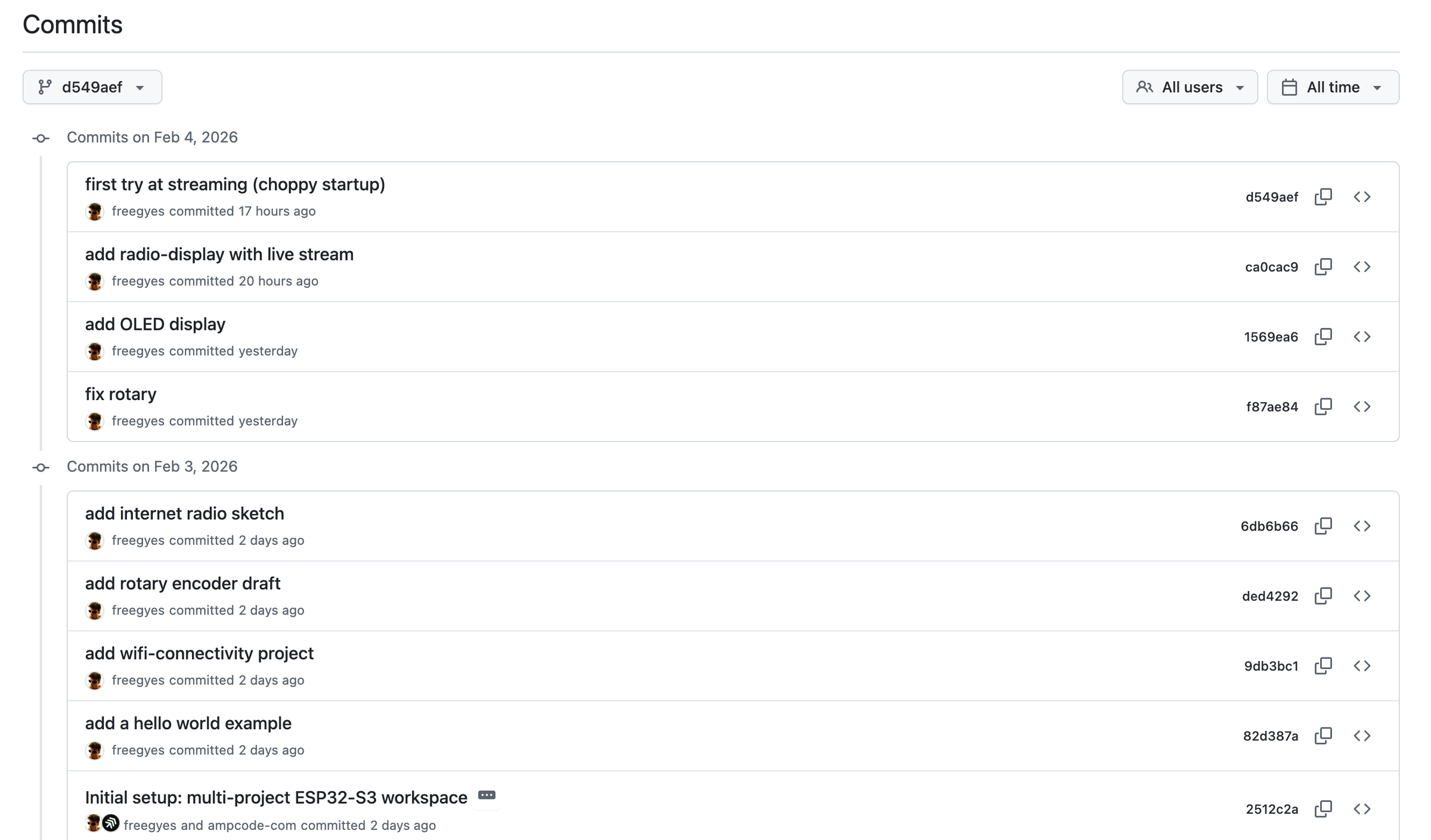
On the other hand, it definitely weakens the "I made this!" feeling that usually deepens my emotional connection to the things I build. I still recommend trying it yourself. Especially if you allow yourself to let go of control for a while. If you are curious, the code as it stood at the first "wow, the concept works" moment is available on GitHub.
Enough for Today
Today, the radio sits on my desk exactly like this: unfinished, slightly flawed, and quietly doing its one job. I turned it on when I wanted music in the morning, and I turned it off when I’d had enough. Maybe I’ll do so again tomorrow.
Maybe that’s the real test. Not whether it becomes a product with a roadmap, but whether it finds a place in my daily life in a way that feels good.
Today, it definitely did — and that feels like enough.